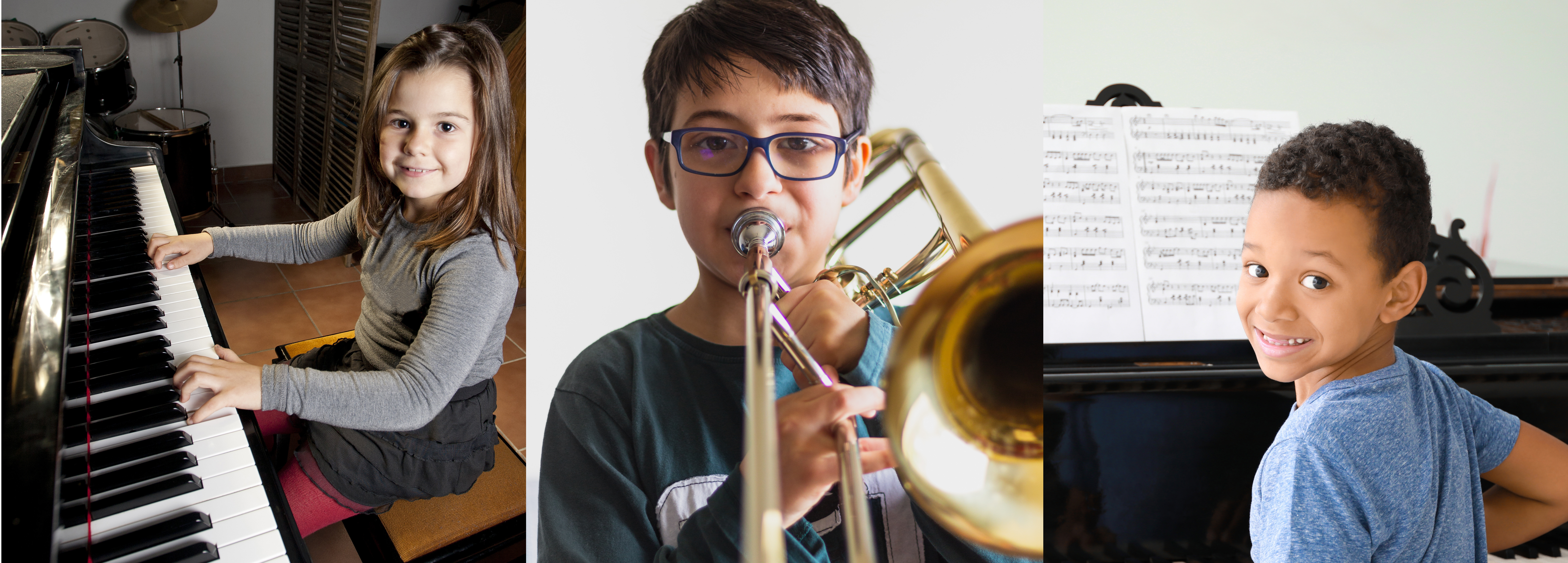
Absolutely anyone can compose with a little help. That’s great news! Even better, the process of creating music is good for your brain, your musicality, and music literacy. It feels good too, giving us a sense of ownership and accomplishment.
There are a mix of instruments in my studio. I teach piano, trumpet, trombone, and guitar. Practically all of my beginners compose a short melody within the first three lessons. I’ve also done this type of composing with elementary music classes learning xylophone and recorder. Here’s what it looks like:
Pick Notes
Once the student has learned to play three notes I ask them if they’d like to write a song. Most students show a mix of surprise and excitement at this question. I tell them it will be super simple. We take the three notes they know and I ask them which one they’d like to start with. (Instead of notes, you may use finger numbers, chords, or even high/middle/low or three percussion instruments they can play. There are so many possibilities, depending on what you teach them first. I’ve used notes here for simplicity.) Depending on their age, one of us writes down what they chose.
I continue by asking what they want to go next. Will it be the same note or something different? They will tend to assume they need to pick something different unless I give them the option to use the same note twice in a row. If I want them to use their ears I might play the first note twice in a row, then the first note with the other two options and ask which they liked best. We continue adding until they have at least eight notes in a row.
Play and Listen
Once they have 8 notes written they play their tune to hear what it sounds like. If they play it slowly I will play it back for them so they can hear the whole thing. I ask them what they think of it. If there is time I ask if there are any notes they want to change. Usually my students are happy with what they’ve got, but if they do want to change any notes we switch them out and play it again.
I congratulate them on writing their first song! Playing your own song is great reinforcement for those first notes learned and kids are often eager to show it off to their friends and family.
Add To It
I usually ask next if they can think of a title for their song and if they want to add words. You can add the words with one syllable per note (some students will do this naturally) or one word per note.
Maybe next time you meet you can add bar lines and note heads under the letters. After that maybe add another eight notes and dynamics. Take it a little further. The student doesn’t have to know all of the symbols yet but you can help to make it look more like real music notation, and they will be proud to see their work looking professional.
This type of composing is so easy, but a beginner will relish these early successes and will likely be more open to composing in the future once they get a taste of how fun and easy it is.
Try it and enjoy!
Leave a comment to let me know how you compose with beginners.
 Piano and Brass Lessons in Asheville, NC